
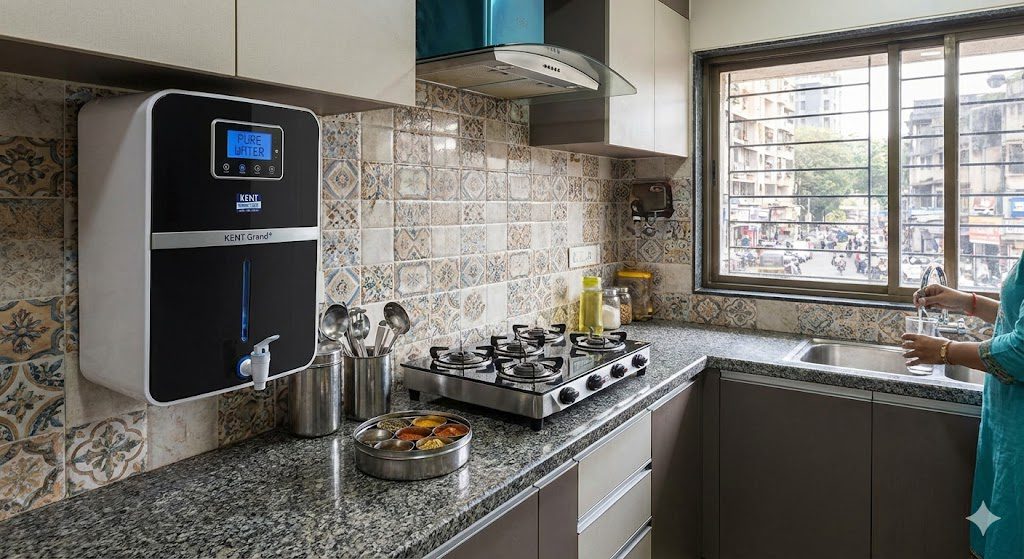
Did you know that over 70% of India’s surface water is contaminated? This alarming fact makes choosing the best water purifier in India not just a luxury but a necessity for every household.
Every day, millions of Indian families face the challenge of accessing clean, safe drinking water. Whether you live in a metro city or a small town, water quality varies dramatically. Municipal water often contains harmful TDS levels, bacteria, viruses, and chemical contaminants that can cause serious health issues.
In this comprehensive guide, you will discover everything you need to know about water purifiers in India. We will cover the different types of purification technologies, compare top brands, analyze price ranges, and help you find the perfect water purifier for your specific needs.
By the end of this article, you will have complete clarity on which water purifier suits your home, budget, and water quality requirements. Let us dive into the world of water purification and ensure your family drinks nothing but pure, healthy water.
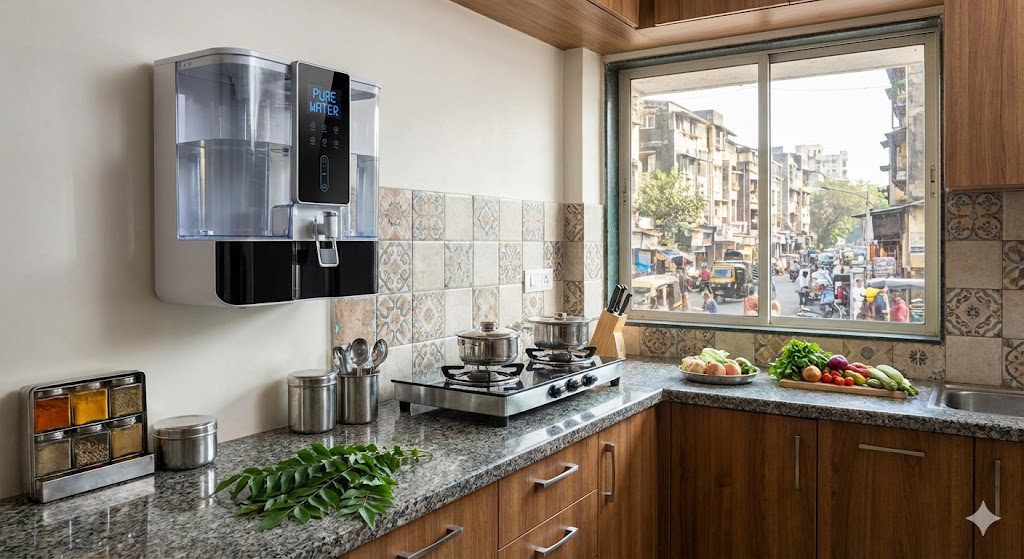
Why Do You Need a Water Purifier in India?
Understanding Water Contamination in India
India faces unique water quality challenges that make water purifiers essential. The water that reaches your tap travels through aging infrastructure, picking up contaminants along the way.
Here are the primary concerns with Indian tap water:
- High TDS Levels: Many regions have Total Dissolved Solids exceeding 500 ppm, making water taste salty and potentially harmful
- Bacterial Contamination: Waterborne bacteria like E. coli and Salmonella are common in untreated water
- Viral Presence: Hepatitis A and Rotavirus can survive in contaminated water supplies
- Heavy Metals: Lead, arsenic, and mercury contamination affects groundwater in several states
- Chlorine and Chemicals: Municipal treatment plants add chemicals that remain in your drinking water
- Pesticide Residues: Agricultural runoff introduces pesticides into water sources
Health Risks of Drinking Impure Water
Consuming contaminated water leads to numerous health problems. Understanding these risks emphasizes why investing in the best water purifier in India is crucial.
Short-term Health Effects:
- Diarrhea and stomach infections
- Nausea and vomiting
- Skin rashes and allergies
- Typhoid and cholera
Long-term Health Effects:
- Kidney damage from heavy metals
- Liver problems
- Neurological disorders
- Increased cancer risk
- Weakened immune system
Children and elderly family members are especially vulnerable. A quality water purifier eliminates these risks and protects your entire family.
Regional Water Quality Differences
Water quality varies significantly across India. Understanding your region’s water helps you choose the right purifier.
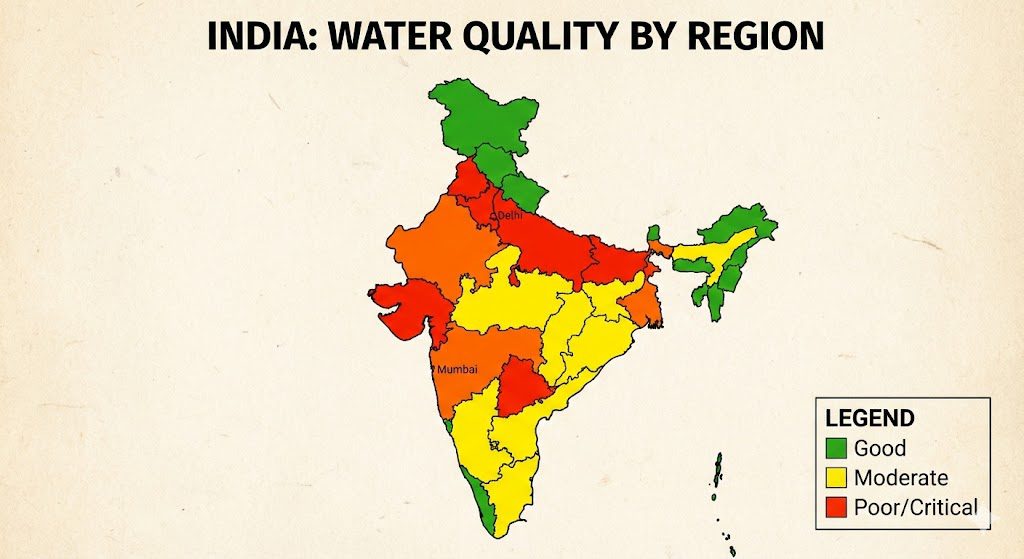
| Region | Common Issues | TDS Range | Recommended Purifier Type |
|---|---|---|---|
| Delhi NCR | High TDS, heavy metals | 400-800 ppm | RO + UV + UF |
| Mumbai | Moderate TDS, chlorine | 150-300 ppm | UV + UF |
| Chennai | Very high TDS, salinity | 600-2000 ppm | RO + UV |
| Kolkata | Arsenic, iron content | 200-500 ppm | RO + UV + UF |
| Bangalore | Moderate to high TDS | 300-600 ppm | RO + UV |
| Rural Areas | Bacteria, viruses, pesticides | Varies | RO + UV + UF |
Types of Water Purifiers Available in India
Choosing the best water purifier in India starts with understanding the different technologies available. Each type addresses specific contaminants and suits particular water conditions.
RO (Reverse Osmosis) Water Purifiers
Reverse Osmosis technology is the most popular and effective water purification method in India. RO purifiers use a semipermeable membrane to remove dissolved impurities from water.
How RO Technology Works:
RO systems push water through a membrane with microscopic pores. These pores are so tiny that only water molecules pass through. Contaminants, dissolved salts, and impurities get filtered out.
What RO Purifiers Remove:
- Dissolved salts and minerals
- Heavy metals (lead, arsenic, mercury)
- Pesticides and chemicals
- Bacteria and viruses
- Fluoride and nitrates
Advantages of RO Purifiers:
- Most effective against high TDS water
- Removes 90-95% of dissolved impurities
- Improves water taste significantly
- Essential for groundwater and borewell water
- Long-lasting membrane life (2-3 years)
Disadvantages of RO Purifiers:
- Wastes water during purification (ratio typically 3:1)
- Removes beneficial minerals
- Higher initial cost
- Requires electricity to operate
- Regular maintenance needed
Best Suited For:
- Areas with TDS above 500 ppm
- Borewell and groundwater sources
- Regions with heavy metal contamination
- Municipal water with high salt content
UV (Ultraviolet) Water Purifiers
UV water purifiers use ultraviolet light to kill microorganisms in water. This technology is highly effective against biological contaminants.
How UV Technology Works:
Water passes through a chamber containing a UV lamp. The ultraviolet light penetrates microorganisms and destroys their DNA, making them unable to reproduce or cause illness.
What UV Purifiers Remove:
- Bacteria (99.99% elimination)
- Viruses
- Protozoa and cysts
- Other pathogenic microorganisms
What UV Purifiers Cannot Remove:
- Dissolved salts and TDS
- Heavy metals
- Chemicals and pesticides
- Physical impurities
Advantages of UV Purifiers:
- No water wastage
- Chemical-free purification
- Retains natural minerals
- Lower maintenance cost
- Energy efficient operation
- Fast purification speed
Disadvantages of UV Purifiers:
- Ineffective against dissolved impurities
- Requires electricity
- Does not improve taste if TDS is high
- Needs clear water for effective UV penetration
Best Suited For:
- Areas with TDS below 300 ppm
- Municipal water supply
- Regions with biological contamination
- Where mineral retention is important
UF (Ultrafiltration) Water Purifiers
UF purifiers use hollow fiber membranes to filter water physically. They work without electricity and remove larger contaminants.
How UF Technology Works:
Water passes through hollow fiber membranes with pore sizes around 0.01 microns. This removes bacteria, cysts, and suspended particles while allowing dissolved minerals to pass through.
What UF Purifiers Remove:
- Bacteria and cysts
- Suspended particles
- Turbidity and cloudiness
- Some larger viruses
Advantages of UF Purifiers:
- No electricity required
- No water wastage
- Retains essential minerals
- Low maintenance cost
- Long membrane life
- Works with gravity-based systems
Disadvantages of UF Purifiers:
- Cannot remove dissolved salts
- Less effective against all viruses
- Not suitable for high TDS water
Best Suited For:
- Low TDS areas (below 200 ppm)
- As pre-filter before RO
- Power outage prone areas
- Basic filtration needs
Gravity-Based Water Purifiers
Gravity-based purifiers work without electricity, using natural gravity to filter water through multiple stages.
Features:
- No electricity needed
- Affordable option
- Uses combination of UF and activated carbon
- Suitable for low TDS water
- Portable and easy to maintain
Limitations:
- Slow purification rate
- Not effective for high TDS
- Limited contaminant removal
RO + UV + UF Combination Purifiers
Modern water purifiers in India often combine multiple technologies for comprehensive purification. These multi-stage systems offer the best protection.
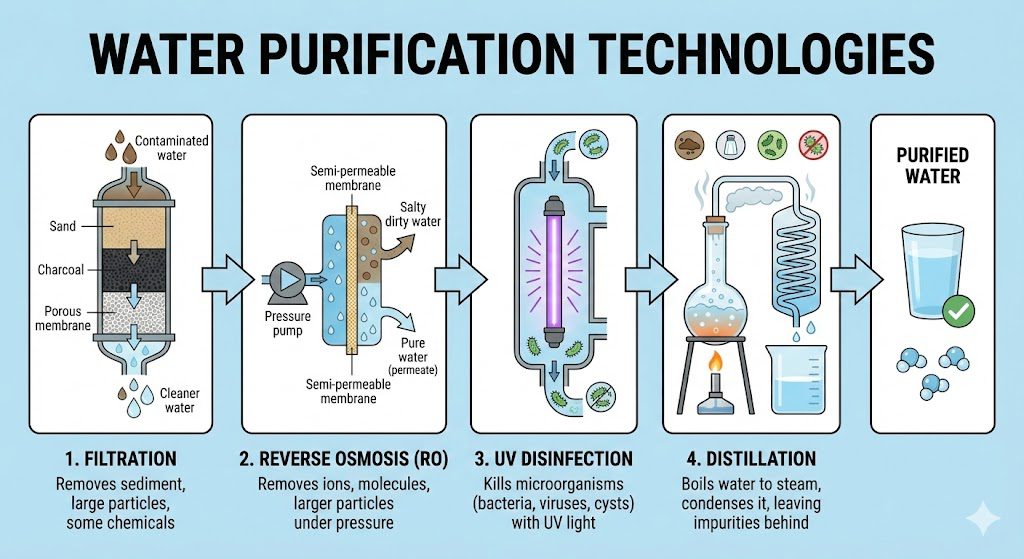
How Combination Purifiers Work:
- Pre-filter Stage: Removes sediment and large particles
- Activated Carbon Filter: Removes chlorine, odor, and organic compounds
- RO Membrane: Eliminates dissolved impurities and heavy metals
- UV Chamber: Kills any remaining microorganisms
- UF Membrane: Final filtration for added safety
- Post Carbon Filter: Improves taste and adds polish
- TDS Controller: Balances mineral content for optimal taste
Why Choose Combination Purifiers:
- Complete protection against all contaminants
- Suitable for varying water quality
- Maintains essential mineral balance
- Ideal for Indian water conditions
- Best value for comprehensive purification
Top 10 Best Water Purifiers In India 2026
After extensive research and analysis, here are the best water purifiers available in India. We have considered purification technology, brand reliability, customer reviews, after-sales service, and value for money.
1. Kent Grand Plus
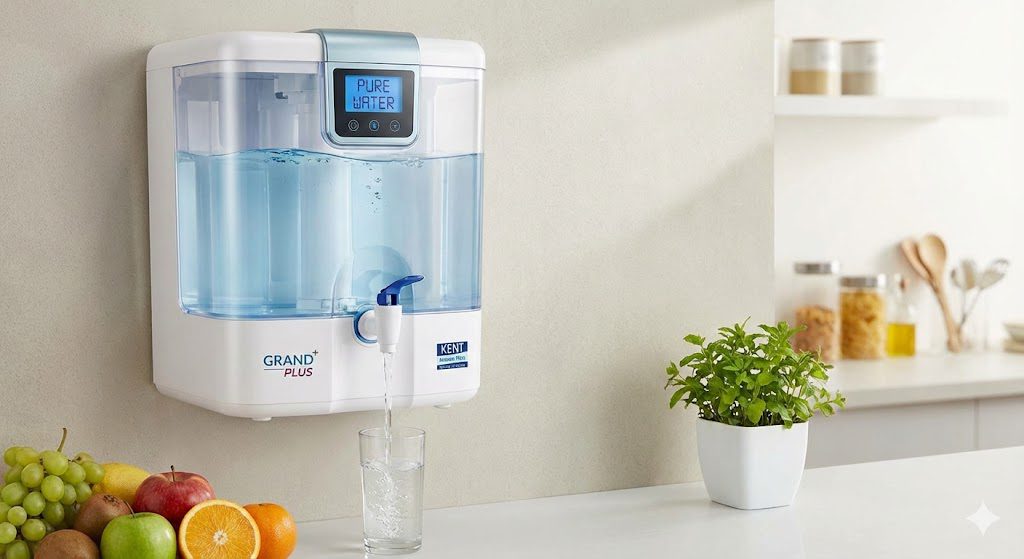
Kent is India’s most trusted water purifier brand, and the Grand Plus represents their flagship offering.
Key Specifications:
- Technology: RO + UV + UF + TDS Controller
- Storage Capacity: 8 Liters
- Purification Capacity: 20 Liters/hour
- Membrane Type: Thin Film Composite (TFC)
- Power Consumption: 60 Watts
Standout Features:
- Patented Mineral RO technology
- Zero water wastage technology
- UV LED lamp for energy efficiency
- Wall-mountable and countertop options
- Smart filter change alarm
Pros:
- Excellent brand reputation and service network
- Comprehensive multi-stage purification
- Suitable for TDS up to 2000 ppm
- ISI and WQA certified
- 4-year free service warranty available
Cons:
- Premium pricing
- Replacement filters can be expensive
- Slightly bulky design
Best For: Families looking for trusted brand with excellent service support
Price Range: ₹18,000 – ₹22,000
2. Aquaguard Aura
Eureka Forbes’ Aquaguard Aura brings innovative features to water purification with its smart technology integration.
Key Specifications:
- Technology: RO + UV + MTDS + Active Copper
- Storage Capacity: 7 Liters
- Purification Capacity: 15 Liters/hour
- UV-C LED Technology
- Smart IoT Enabled
Standout Features:
- Active Copper technology infuses copper into water
- Biotron cartridge for enhanced immunity
- UV-C LED lasts 4 times longer than conventional UV
- Taste adjuster for customized TDS
- Smart alerts via mobile app
Pros:
- Innovative copper infusion technology
- Energy efficient UV-C LED
- Excellent build quality
- Strong service network across India
- Adjustable TDS control
Cons:
- Higher price point
- App connectivity can be inconsistent
- Proprietary filters increase maintenance cost
Best For: Health-conscious families wanting copper-infused water
Price Range: ₹20,000 – ₹28,000
3. HUL Pureit Ultima Mineral
Hindustan Unilever’s Pureit Ultima delivers reliable purification with mineral enhancement technology.
Key Specifications:
- Technology: RO + UV + MF + Mineral Cartridge
- Storage Capacity: 10 Liters
- Purification Capacity: 24 Liters/hour
- TDS Limit: Up to 2000 ppm
- Eco Recovery Technology
Standout Features:
- Mineral cartridge adds calcium and magnesium
- Eco Recovery saves up to 80% water
- Digital purity indicator
- Smartsense indicators for filter life
- DuraViva technology for extended life
Pros:
- Large storage capacity
- Excellent water recovery ratio
- Adds essential minerals
- Affordable filter replacements
- Good purification speed
Cons:
- Service network not as extensive as Kent/Aquaguard
- Bulkier design
- Plastic build quality could be better
Best For: Large families needing high capacity purifier
Price Range: ₹16,000 – ₹20,000
4. Blue Star Stella
Blue Star brings its cooling technology expertise to water purification with the Stella series.
Key Specifications:
- Technology: RO + UV + UF
- Storage Capacity: 8 Liters
- Purification Capacity: 15 Liters/hour
- Aqua Taste Booster (ATB)
- Double-layered RO membrane
Standout Features:
- Aqua Taste Booster enhances water taste
- Child lock feature for safety
- Unique design with elegant finish
- UV fail alert system
- Pre and post carbon filters
Pros:
- Excellent build quality
- Improved taste with ATB
- Good after-sales service
- Energy efficient
- Competitive pricing
Cons:
- Smaller brand presence in water purifiers
- Limited model variants
- Service centers not everywhere
Best For: Quality-conscious buyers wanting good design
Price Range: ₹14,000 – ₹18,000
5. LG PuriCare WW180EP
LG brings its electronics expertise to water purification with advanced features.
Key Specifications:
- Technology: RO + UV + Mineral Booster
- Storage Capacity: 8 Liters
- Purification Capacity: 15 Liters/hour
- Stainless Steel Tank
- True Filtration Display
Standout Features:
- Stainless steel tank prevents bacterial growth
- Digital sterilizing care cleans tank automatically
- Mineral booster adds calcium and magnesium
- True filtration display shows filter status
- Smart inverter motor for efficiency
Pros:
- Stainless steel tank is hygienic
- Reliable LG brand quality
- Excellent display and controls
- Automatic tank cleaning feature
- Good service network
Cons:
- Premium pricing
- Replacement parts can be expensive
- Limited color options
Best For: Tech-savvy users wanting premium features
Price Range: ₹22,000 – ₹30,000
6. Havells Max Alkaline
Havells Max brings alkaline water technology to Indian homes for enhanced health benefits.
Key Specifications:
- Technology: RO + UV + Alkaline
- Storage Capacity: 7 Liters
- Purification Capacity: 15 Liters/hour
- 8-Stage Purification
- Revitalizer Technology
Standout Features:
- Alkaline enhancer increases water pH
- iProtect monitoring ensures safe water
- Revitalizer restores natural water properties
- Corner mounting design saves space
- 100% RO purification
Pros:
- Alkaline water benefits
- Space-saving design
- Reliable Havells brand
- Good purification stages
- Digital filter life indicator
Cons:
- Alkaline benefits debated scientifically
- Moderate storage capacity
- Service availability varies by region
Best For: Those wanting alkaline water for health
Price Range: ₹17,000 – ₹22,000
7. AO Smith Z8 Green RO
AO Smith brings water-saving technology to address India’s RO water wastage concerns.
Key Specifications:
- Technology: RO + SCMT + MIN-TECH
- Storage Capacity: 10 Liters
- Recovery Rate: Up to 2X
- Side Stream RO Membrane
- Hot water dispenser (in select variants)
Standout Features:
- Side Stream RO reduces water wastage by 2X
- MIN-TECH adds essential minerals
- SCMT (Silver Charged Membrane Technology)
- Hot water dispenser variant available
- Advanced digital display
Pros:
- Excellent water recovery ratio
- High-quality American brand
- Good mineral retention
- Hot water option is unique
- Premium build quality
Cons:
- One of the most expensive options
- Limited service network in smaller cities
- Complex technology may need expert service
Best For: Eco-conscious buyers worried about water wastage
Price Range: ₹28,000 – ₹45,000
8. Livpure Glo Pro++
Livpure offers value-oriented water purifiers with comprehensive features.
Key Specifications:
- Technology: RO + UV + UF + Mineraliser
- Storage Capacity: 7 Liters
- Purification Capacity: 15 Liters/hour
- 7-Stage Purification
- In-tank UV sterilization
Standout Features:
- In-tank UV keeps stored water pure
- Copper and zinc mineraliser
- Super sediment filter
- Anti-scalant cartridge
- LED indicators for all functions
Pros:
- Affordable pricing
- In-tank UV is excellent feature
- Copper infusion at budget price
- Good value for money
- Decent service network
Cons:
- Build quality not premium
- Smaller brand recognition
- Filter quality varies
Best For: Budget-conscious buyers wanting good features
Price Range: ₹12,000 – ₹16,000
9. V-Guard Zenora RO UV
V-Guard brings its electrical expertise to water purification with reliable performance.
Key Specifications:
- Technology: RO + UV + UF + Mineral
- Storage Capacity: 7 Liters
- Purification Capacity: 15 Liters/hour
- 9-Stage Purification
- Free Service for 1 Year
Standout Features:
- 9-stage comprehensive purification
- Mineraliser adds beneficial minerals
- LED UV failure alert
- Compact wall-mountable design
- Transparent last filter stage
Pros:
- Excellent value for money
- V-Guard brand reliability
- Good service network in South India
- Comprehensive purification stages
- Affordable maintenance
Cons:
- Brand less known outside South India
- Basic design aesthetics
- Limited premium features
Best For: South Indian buyers wanting reliable performance
Price Range: ₹10,000 – ₹14,000
10. Faber Galaxy Plus
Faber offers European design with Indian functionality.
Key Specifications:
- Technology: RO + UV + MAT
- Storage Capacity: 7 Liters
- Purification Capacity: 12 Liters/hour
- MAT (Mineral Addition Technology)
- European Design
Standout Features:
- Sleek European design aesthetics
- MAT adds essential minerals
- UV LED technology
- Transparent water tank
- Multiple mounting options
Pros:
- Attractive design
- Good purification technology
- Reasonable pricing
- Growing service network
- Quality components
Cons:
- Brand not as established in India
- Smaller service network
- Moderate purification capacity
Best For: Design-conscious buyers with moderate needs
Price Range: ₹12,000 – ₹16,000
Complete Water Purifier Comparison Table
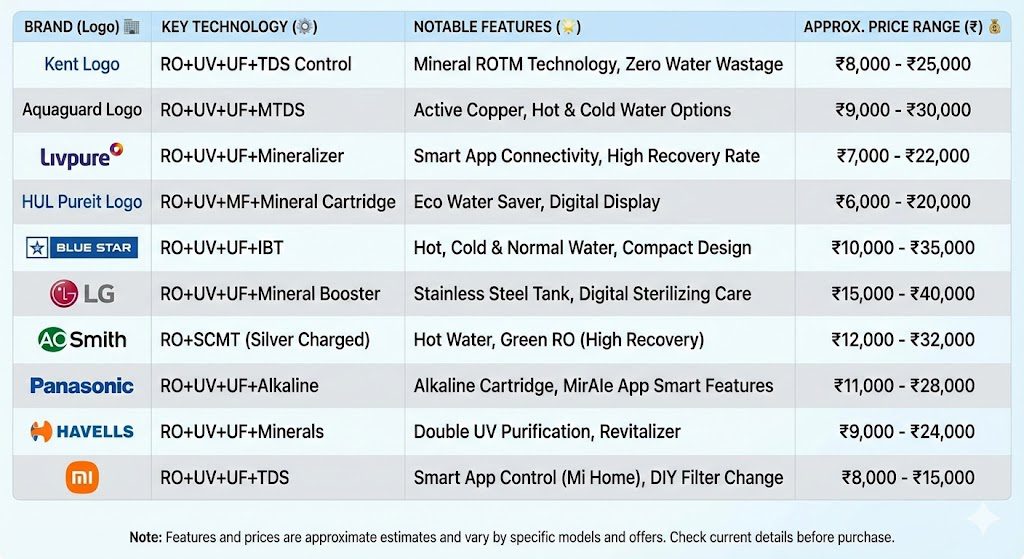
| Brand & Model | Technology | Storage | Purification Rate | TDS Range | Special Feature | Price Range |
|---|---|---|---|---|---|---|
| Kent Grand Plus | RO+UV+UF | 8L | 20 L/hr | Up to 2000 ppm | Zero wastage tech | ₹18,000-22,000 |
| Aquaguard Aura | RO+UV+MTDS | 7L | 15 L/hr | Up to 2000 ppm | Active Copper | ₹20,000-28,000 |
| Pureit Ultima | RO+UV+MF | 10L | 24 L/hr | Up to 2000 ppm | Eco Recovery | ₹16,000-20,000 |
| Blue Star Stella | RO+UV+UF | 8L | 15 L/hr | Up to 2000 ppm | Aqua Taste Booster | ₹14,000-18,000 |
| LG PuriCare | RO+UV | 8L | 15 L/hr | Up to 2000 ppm | SS Tank | ₹22,000-30,000 |
| Havells Max | RO+UV+Alk | 7L | 15 L/hr | Up to 2000 ppm | Alkaline water | ₹17,000-22,000 |
| AO Smith Z8 | RO+SCMT | 10L | 15 L/hr | Up to 2000 ppm | 2X water saving | ₹28,000-45,000 |
| Livpure Glo Pro++ | RO+UV+UF | 7L | 15 L/hr | Up to 2000 ppm | In-tank UV | ₹12,000-16,000 |
| V-Guard Zenora | RO+UV+UF | 7L | 15 L/hr | Up to 2000 ppm | 9-stage purify | ₹10,000-14,000 |
| Faber Galaxy | RO+UV+MAT | 7L | 12 L/hr | Up to 2000 ppm | European design | ₹12,000-16,000 |
How to Choose the Best Water Purifier in India
Selecting the right water purifier requires careful consideration of several factors. This section will guide you through the decision-making process.
Step 1: Test Your Water Quality
Before buying any water purifier, knowing your water quality is essential. Here is how to test:
TDS Testing:
- Purchase a TDS meter (₹200-500 online)
- Dip the meter in a glass of water
- Note the reading in ppm (parts per million)
Understanding TDS Readings:
| TDS Level | Water Quality | Recommended Purifier |
|---|---|---|
| Below 200 ppm | Excellent | UV or UF sufficient |
| 200-500 ppm | Good | RO optional, UV recommended |
| 500-1000 ppm | Moderate | RO essential |
| 1000-2000 ppm | Poor | RO + UV necessary |
| Above 2000 ppm | Very Poor | Industrial RO or high-capacity RO |
Other Tests to Consider:
- pH level testing
- Bacterial contamination tests
- Heavy metal testing (if suspected)
- Get professional water analysis for comprehensive results
Step 2: Understand Your Water Source
Your water source determines which purifier works best:
Municipal Corporation Water:
- Generally treated but may have chlorine
- TDS usually moderate (150-500 ppm)
- May pick up contamination in old pipelines
- UV or RO+UV suitable depending on TDS
Borewell/Groundwater:
- Often has high TDS (500-2000+ ppm)
- May contain heavy metals
- Hard water common
- RO purifier essential
Tanker Water:
- Quality highly variable
- Source often unknown
- May have biological contamination
- RO + UV + UF strongly recommended
River/Lake Water (Rural Areas):
- High biological contamination risk
- Turbidity and sediment common
- Agricultural runoff possible
- Multi-stage purification essential
Step 3: Assess Your Family Size and Usage
Water consumption determines the storage and purification capacity you need.
Daily Water Requirement Calculation:
- Adults: 2-3 liters per person
- Children: 1-2 liters per person
- Cooking and beverages: 3-5 liters for family
- Add 20% buffer for guests and additional use
Recommended Capacity by Family Size:
| Family Size | Daily Need | Storage Capacity | Purification Rate |
|---|---|---|---|
| 2-3 members | 8-12 liters | 7-8 liters | 12-15 L/hr |
| 4-5 members | 15-20 liters | 10-12 liters | 15-20 L/hr |
| 6+ members | 25+ liters | 12-15 liters | 20+ L/hr |
| Office/Commercial | 50+ liters | 20+ liters | 25+ L/hr |
Step 4: Consider Your Budget
Water purifiers in India span a wide price range. Here is what to expect:
Budget Category: ₹8,000 – ₹12,000
- Basic RO or UV purifiers
- Fewer purification stages
- Smaller storage tanks
- Limited features
- Basic warranty coverage
Mid-Range Category: ₹12,000 – ₹20,000
- RO + UV combination
- 7-8 stage purification
- Mineral enhancement
- Better build quality
- Extended warranty options
Premium Category: ₹20,000 – ₹35,000
- RO + UV + UF + extras
- Advanced features (copper, alkaline)
- Stainless steel tanks
- Smart connectivity
- Comprehensive warranty
Super Premium: ₹35,000+
- Hot and cold water options
- Maximum water recovery
- Premium build materials
- Extended service packages
- Top-tier brand offerings
Annual Maintenance Costs to Consider:
- Filter replacements: ₹3,000 – ₹6,000 per year
- Service visits: ₹500 – ₹1,500 per visit
- Membrane replacement: ₹2,000 – ₹4,000 (every 2-3 years)
Step 5: Evaluate Brand and Service Network
After-sales service is crucial for water purifiers. Consider:
Service Network Strength:
- Check service availability in your city/area
- Verify response time for complaints
- Look for multiple service centers nearby
- Ask about doorstep service availability
Top Brands by Service Network:
- Kent: Pan-India presence, 2000+ service centers
- Aquaguard (Eureka Forbes): Extensive network, direct sales force
- Pureit (HUL): Good urban coverage, authorized centers
- LG: Nationwide electronics service infrastructure
- Havells: Growing network, good in metros
Questions to Ask Before Buying:
- What is the warranty period?
- Are AMC (Annual Maintenance Contract) options available?
- What is the turnaround time for service complaints?
- Are genuine spare parts readily available?
- What is the cost of standard service visits?
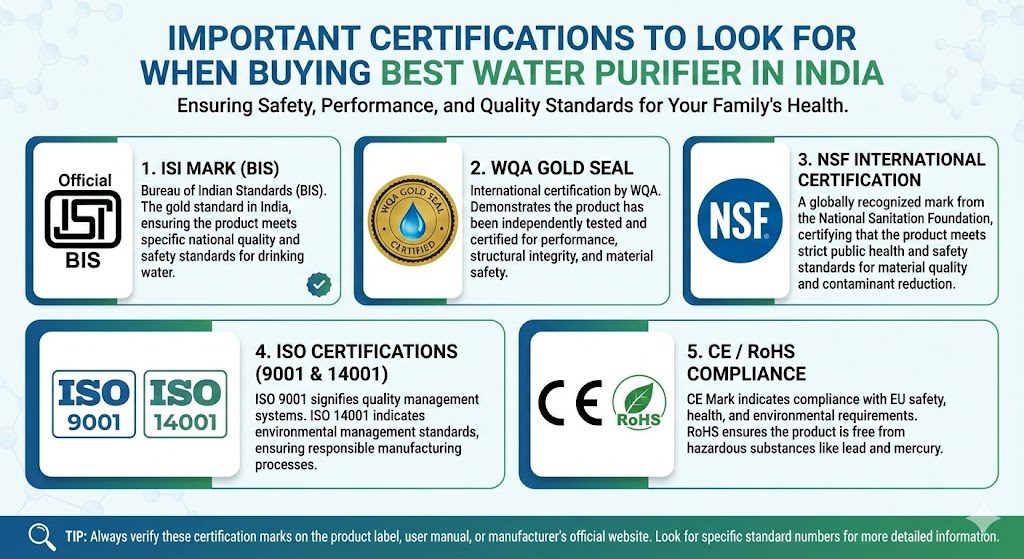
Step 6: Check for Certifications
Look for these certifications that indicate quality and safety:
Important Certifications:
- ISI Certification: Bureau of Indian Standards mark
- NSF Certification: International water quality standard
- WQA Gold Seal: Water Quality Association certification
- CE Marking: European safety standards
- NABL Tested: National Accreditation Board tested
Water Purifier Installation and Maintenance Guide
Professional Installation Tips
Proper installation ensures optimal performance of your water purifier.
Pre-Installation Checklist:
- Identify suitable wall location near water source
- Ensure electrical outlet within reach
- Check water pressure (minimum 0.3 kg/cm² typically needed)
- Plan drain water outlet for RO waste
- Measure space for purifier dimensions
Installation Best Practices:
- Always use authorized installation service
- Ensure all connections are leak-proof
- Verify proper electrical earthing
- Test all features after installation
- Keep installation receipt for warranty
Essential Maintenance Schedule
Regular maintenance keeps your purifier performing optimally.
Monthly Tasks:
- Check for any leaks or drips
- Clean the external body
- Verify all indicator lights working
- Check water taste and quality
Quarterly Tasks:
- Replace sediment/pre-filter
- Clean or replace activated carbon filter
- Check and clean water tank
- Inspect all tubing connections
Annual Tasks:
- Professional service inspection
- Membrane cleaning or replacement check
- UV lamp replacement (typically yearly)
- Complete sanitization of system
- Calibrate TDS controller if applicable
Membrane Replacement Signs:
- Decreased water flow rate
- Poor taste despite other filter changes
- TDS reduction less than expected
- Visible membrane damage
- Recommended 2-3 year replacement cycle
DIY Maintenance Tips
Some maintenance tasks can be done at home:
Cleaning the Storage Tank:
- Turn off purifier and drain tank completely
- Remove tank if detachable
- Use mild soap solution to clean interior
- Rinse thoroughly with clean water
- Allow to dry before reconnecting
- Run purification cycle before drinking
Changing Basic Filters:
- Turn off water supply and power
- Remove old filter cartridge
- Install new cartridge with proper alignment
- Hand-tighten only (do not over-tighten)
- Run water for 2-3 minutes before use
- Check for leaks
Important Warning: Do not attempt to replace RO membrane or UV lamp yourself. These require professional handling to avoid damage or injury.
Understanding Water Purifier Technologies in Depth
Reverse Osmosis (RO) Technology Explained
RO technology is the backbone of most water purifiers in India. Understanding it helps you appreciate its importance.
The Science Behind RO:
Reverse osmosis works by applying pressure to force water through a semipermeable membrane. This membrane has microscopic pores of approximately 0.0001 microns, allowing only water molecules to pass through while blocking contaminants.
RO Membrane Types:
- TFC (Thin Film Composite):
- Most common type
- Good chlorine resistance
- High rejection rate (95-98%)
- Longer lifespan
- CTA (Cellulose Triacetate):
- Older technology
- Less expensive
- Lower rejection rate
- Needs chlorinated water
Factors Affecting RO Performance:
- Input water TDS level
- Water temperature
- Operating pressure
- Membrane condition
- Pre-filter effectiveness
TDS Controllers and Mineral Retention
Modern RO purifiers address the mineral loss concern through various technologies.
Why Minerals Matter:
RO membranes remove both harmful and beneficial minerals. Essential minerals like calcium and magnesium are important for health. TDS controllers help retain appropriate mineral levels.
How TDS Controllers Work:
TDS controllers mix a small portion of input water (bypassing RO) with purified water. This blend maintains optimal mineral levels while ensuring safety.
Types of Mineral Addition:
- TDS Controller: Mixes input and RO water
- Mineral Cartridge: Adds specific minerals post-RO
- Mineral RO Technology: Retains essential minerals during purification
- Alkaline Enhancement: Adds alkaline minerals for pH balance
Optimal TDS for Drinking Water:
- WHO recommendation: Below 500 ppm safe
- Ideal range: 50-150 ppm
- Best taste: 80-120 ppm
- Below 50 ppm: May taste flat
UV Sterilization Deep Dive
UV technology provides chemical-free disinfection essential for biological safety.
UV Light Specifications:
- Wavelength: 254 nanometers (UV-C range)
- Dosage: Minimum 40 mJ/cm² for effective sterilization
- Contact time: Typically 2-5 seconds
- Lamp life: 8,000-12,000 hours
UV Effectiveness Against:
- Bacteria: 99.99% elimination
- Viruses: 99.99% elimination
- Protozoa: 99.9% elimination
- Cysts: 99% elimination
UV Limitations:
- Requires relatively clear water
- Does not remove physical impurities
- Inactive organisms remain in water
- Needs electricity to function
Emerging Technologies in Water Purification
The water purifier industry continues to innovate with new technologies.
Copper Infusion Technology:
- Adds copper ions to purified water
- Copper has antimicrobial properties
- Traditional Ayurvedic benefits
- Available in Aquaguard and Livpure models
Alkaline Water Technology:
- Raises water pH to 8-9.5
- Claimed health benefits (debated)
- Uses mineral plates or cartridges
- Popular in Havells and Kent models
Hot and Cold Water Purifiers:
- Instant hot water dispensing
- Chilled water option
- Higher energy consumption
- Premium pricing
- Available from AO Smith and LG
IoT and Smart Purifiers:
- Mobile app connectivity
- Filter life monitoring
- Water consumption tracking
- Remote diagnostics
- Real-time alerts
Water Purifier Buying Mistakes to Avoid
Common Mistakes First-Time Buyers Make
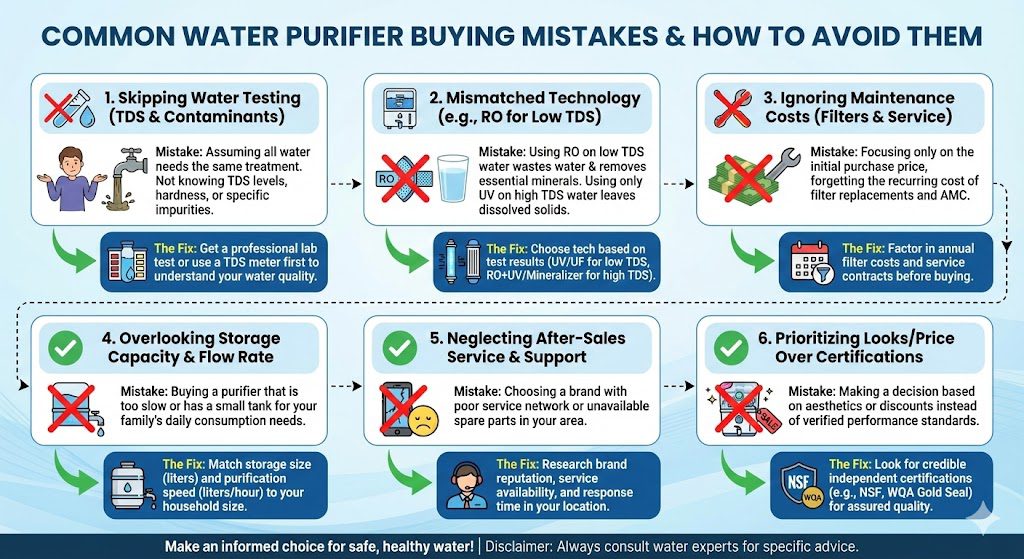
Avoid these errors when purchasing the best water purifier in India:
Mistake 1: Ignoring Water Quality Testing
Many buyers choose purifiers based on brand popularity alone. Without knowing your water’s TDS and contamination levels, you might buy an unsuitable purifier.
Solution: Always test water quality first. A ₹300 TDS meter is a worthwhile investment.
Mistake 2: Choosing Based on Price Alone
The cheapest option often means compromised quality, fewer purification stages, and poor after-sales service.
Solution: Focus on value, not just price. Consider total cost of ownership including maintenance.
Mistake 3: Overlooking Maintenance Costs
A purifier’s annual maintenance can cost ₹3,000-6,000. Some brands have expensive proprietary filters.
Solution: Ask about maintenance costs before buying. Compare filter prices across brands.
Mistake 4: Ignoring Service Network
A great purifier is useless if service is unavailable in your area.
Solution: Verify service center availability in your location before purchasing.
Mistake 5: Buying Excess Capacity
A family of three does not need a 15-liter commercial-grade purifier.
Solution: Match capacity to actual family size and usage patterns.
Mistake 6: Falling for Marketing Gimmicks
Claims like “100% pure” or “removes all contaminants” are marketing terms, not technical specifications.
Solution: Focus on certifications, specifications, and genuine customer reviews.
Mistake 7: Not Reading the Warranty Terms
Warranty terms often have conditions that buyers overlook.
Solution: Read warranty documents carefully. Understand what is covered and excluded.
Water Purifier for Different Water Sources
Best Purifier for Municipal Water
Municipal water is treated but may still contain contaminants from distribution systems.
Characteristics:
- TDS usually 150-400 ppm
- Chlorine present from treatment
- Possible pipeline contamination
- Generally safer than groundwater
Recommended Options:
- Low TDS (below 200 ppm): UV + UF purifier sufficient
- Moderate TDS (200-400 ppm): RO + UV recommended for best results
- High TDS (above 400 ppm): RO + UV + UF essential
Budget Picks for Municipal Water:
- Aquaguard Enhance (UV + UF): ₹7,000-9,000
- Pureit Marvella (UV + UF): ₹6,000-8,000
- Kent Maxx (UV + UF): ₹8,000-10,000
Best Purifier for Borewell Water
Borewell water presents unique challenges requiring robust purification.
Characteristics:
- High TDS (500-2000+ ppm)
- Hard water with calcium/magnesium
- Possible heavy metal contamination
- Iron and arsenic risk in some areas
Recommended Options:
- RO purifier absolutely essential
- Multi-stage purification recommended
- TDS controller for mineral balance
- Higher capacity for faster purification
Top Picks for Borewell Water:
- Kent Grand Plus: Handles up to 2000 ppm
- Aquaguard Aura: Excellent for hard water
- AO Smith Z8: Best water recovery for high TDS
Best Purifier for Tanker Water
Tanker water quality is unpredictable, requiring comprehensive purification.
Characteristics:
- Source often unknown
- High biological contamination risk
- Variable TDS levels
- May contain industrial pollutants
Essential Features:
- Multi-stage RO + UV + UF
- High-quality pre-filtration
- Regular maintenance critical
- Water storage and tank cleaning important
Recommended Models:
- Kent Supreme: Comprehensive purification
- Aquaguard Superb: Multiple protection layers
- Pureit Ultima: Good for variable water quality
Budget Water Purifiers Under ₹15,000
Quality water purification does not always require premium pricing. Here are excellent options under ₹15,000.
Top Budget Picks
1. Livpure Glo Pro++ (₹12,000-14,000)
- RO + UV + UF + Mineraliser
- 7 liters storage
- In-tank UV sterilization
- Good value for money
2. V-Guard Zenora (₹10,000-12,000)
- RO + UV + UF
- 9-stage purification
- 7 liters capacity
- Excellent South India service
3. Blue Star Aristo (₹11,000-13,000)
- RO + UV + UF
- 7 liters storage
- Aqua Taste Booster
- Good build quality
4. Faber Galaxy Plus (₹12,000-14,000)
- RO + UV + MAT
- European design
- Mineral addition technology
- Growing service network
5. Kelvinator Quanta (₹9,000-11,000)
- RO + UV
- 7 liters storage
- Basic but effective
- Budget-friendly maintenance
Budget Buying Tips
- Focus on essential technologies (RO + UV)
- Prioritize brands with local service
- Check filter replacement costs
- Look for combo offers and exchange deals
- Consider Amazon/Flipkart sales for best prices
Premium Water Purifiers Above ₹25,000
For those seeking the best features and technology, premium purifiers offer significant advantages.
Why Choose Premium Purifiers?
Advanced Features:
- Stainless steel tanks for hygiene
- Hot and cold water options
- Maximum water recovery
- Smart IoT connectivity
- Premium build materials
- Extended warranty coverage
Top Premium Picks
1. AO Smith Z8 Hot (₹40,000-45,000)
- Hot water at 3 temperatures
- Side Stream RO technology
- Minimal water wastage
- Premium American brand
2. LG PuriCare WW180EP (₹28,000-32,000)
- Stainless steel tank
- Digital sterilizing care
- Mineral booster
- Smart display
3. Aquaguard Aura 2X Life (₹28,000-35,000)
- Extended filter life
- Active copper technology
- IoT enabled
- Premium design
4. Kent Prime TC (₹32,000-38,000)
- Wall-mountable + tabletop
- RO + UV + UF + TDS
- Touch dispense
- Zero water wastage
Is Premium Worth It?
Premium purifiers make sense if you:
- Want hot/cold water convenience
- Prioritize stainless steel tanks
- Value smart features
- Prefer extended warranties
- Have high TDS water requiring robust treatment
- Want minimal water wastage
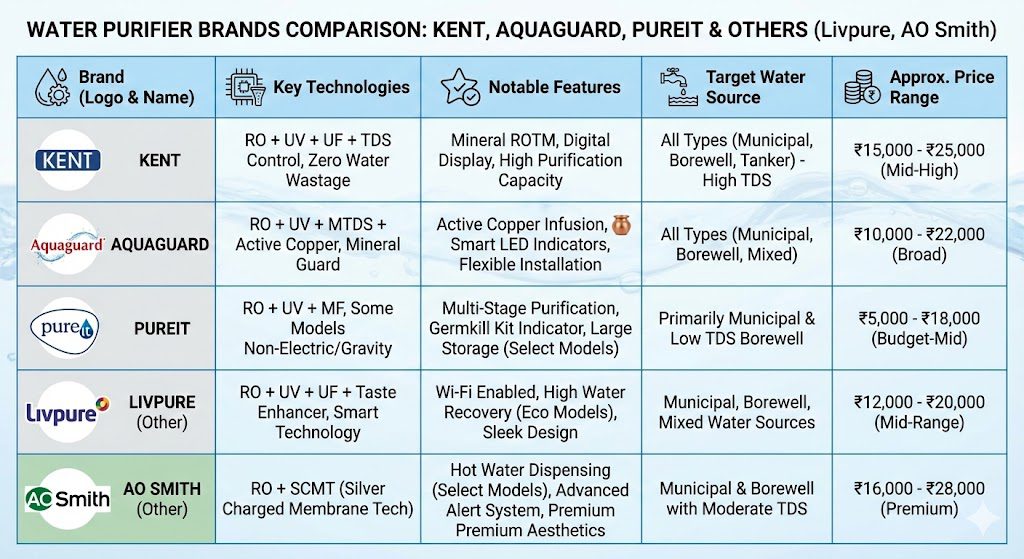
Water Purifier Brands: Complete Analysis
Kent Water Purifiers
Company Background: Kent RO Systems, established in 1998, pioneered RO technology in Indian households. Dr. Mahesh Gupta founded the company after his son suffered from waterborne disease.
Brand Strengths:
- Largest market share in India
- Extensive service network (2000+ centers)
- Wide product range
- Multiple certifications
- Strong brand trust
Popular Models:
- Kent Grand Plus (Best seller)
- Kent Pearl
- Kent Supreme
- Kent Maxx (UV+UF)
- Kent Pride Plus
Service Quality: Excellent pan-India coverage with responsive support
Best For: Families wanting trusted brand with extensive service support
Aquaguard (Eureka Forbes)
Company Background: Eureka Forbes introduced Aquaguard in 1984, becoming India’s first branded water purifier. The company has a unique direct sales model with sales representatives visiting homes.
Brand Strengths:
- Pioneer in Indian water purification
- Direct sales and service model
- Innovative technologies (Active Copper)
- Strong after-sales support
- Trusted household name
Popular Models:
- Aquaguard Aura
- Aquaguard Enhance
- Aquaguard Superb
- Aquaguard Delight
- Aquaguard Marvel
Service Quality: Excellent direct service model with trained technicians
Best For: Customers preferring doorstep sales and service
Pureit (Hindustan Unilever)
Company Background: HUL launched Pureit in 2005, bringing consumer goods expertise to water purification. The brand focuses on affordable purification solutions.
Brand Strengths:
- Backed by HUL’s consumer focus
- Competitive pricing
- Good product range
- Eco-friendly initiatives
- Wide availability
Popular Models:
- Pureit Ultima
- Pureit Marvella
- Pureit Classic
- Pureit Vital
- Pureit Copper+
Service Quality: Good coverage in urban areas through authorized centers
Best For: Value-conscious buyers wanting reliable brand
Other Notable Brands
Blue Star:
- Known for cooling products
- Quality construction
- Growing water purifier portfolio
LG:
- Electronics expertise
- Premium features
- Good service infrastructure
Havells:
- Electrical products heritage
- Innovative designs
- Alkaline technology focus
AO Smith:
- American water technology leader
- Premium positioning
- Best water recovery
Livpure:
- Value-oriented brand
- Good features at lower prices
- Growing market presence
Water Purifier Installation Locations and Requirements
Kitchen Installation Considerations
Most water purifiers are installed in kitchens. Here is what to consider:
Wall-Mounted Installation:
- Requires sturdy wall
- Height: 4-5 feet from floor typically
- Near water source and electrical outlet
- Away from direct sunlight and heat
- Drainage access for RO waste
Countertop Installation:
- Needs adequate counter space
- More accessible for maintenance
- Suitable for renters
- Easy to relocate
Under-Counter Installation:
- Hidden installation
- Saves visible space
- Requires professional setup
- Limited to certain models
Space Requirements by Model Type
| Installation Type | Space Needed | Clearance | Best For |
|---|---|---|---|
| Wall-mounted | 15″ W x 20″ H x 10″ D | 3″ sides, 6″ top | Most homes |
| Countertop | 12″ W x 18″ H x 12″ D | 3″ all sides | Apartments |
| Under-counter | 14″ W x 15″ H x 14″ D | 4″ all sides | Modular kitchens |
Electrical and Plumbing Requirements
Electrical:
- Standard 230V, 15A socket
- Earthed connection essential
- Dedicated outlet recommended
- Voltage stabilizer optional but helpful
Plumbing:
- Minimum water pressure: 0.3 kg/cm²
- Input water connection (cold water line)
- Drain outlet for RO reject water
- Optional: Dedicated purified water tap
Environmental Impact and Water Wastage Solutions
Understanding RO Water Wastage
RO purifiers have faced criticism for water wastage. Understanding this issue helps make informed choices.
Typical Wastage Ratios:
- Standard RO: 3:1 (3 liters waste per 1 liter pure)
- Improved RO: 2:1 ratio
- Best Technology: 1:1 or better
Factors Affecting Wastage:
- Input water TDS level
- Membrane quality and condition
- Operating pressure
- Pre-filter effectiveness
- Recovery technology
Solutions for Minimizing Water Waste
Technology Solutions:
- Zero Water Wastage Technology (Kent):
- Recycles reject water through UV purification
- Reduces wastage significantly
- Available in premium models
- Side Stream RO (AO Smith):
- Modified membrane technology
- Up to 2X better recovery
- Reduces wastage by half
- Eco Recovery (Pureit):
- Saves up to 80% water
- Advanced membrane design
- Available in select models
Practical Solutions:
Ways to Use RO Reject Water:
- Mopping and cleaning floors
- Watering plants (check TDS tolerance)
- Washing vehicles
- Flushing toilets
- Washing clothes (for non-drinking purposes)
Setting Up Reject Water Collection:
- Connect drain to storage container
- Label clearly as non-potable
- Use within 24 hours
- Keep container clean
Frequently Asked Questions About Water Purifiers
Can I drink RO water daily without any health issues?
Yes, drinking RO purified water daily is completely safe. The concern about mineral loss is addressed by modern RO purifiers that include TDS controllers or mineral cartridges. These technologies add back essential minerals like calcium and magnesium after purification. However, maintaining a balanced diet rich in minerals ensures you get adequate nutrition regardless of water mineral content. The safety benefits of removing harmful contaminants far outweigh minor mineral concerns. Most health experts agree that properly purified RO water is excellent for daily consumption.
How do I know when to replace my water purifier filters?
Most modern water purifiers have LED indicators or digital displays showing filter status. Generally, sediment filters need replacement every 3-6 months, carbon filters every 6-12 months, and RO membranes every 2-3 years. Signs that filters need replacement include reduced water flow, change in water taste, unusual odors, or the purifier taking longer to fill the tank. Following your brand’s recommended maintenance schedule and getting annual professional service ensures optimal filter performance. Keep track of installation dates to stay proactive about replacements.
Is UV purifier sufficient for my home, or do I need RO?
The choice between UV and RO depends entirely on your water’s TDS level. If your water TDS is below 300 ppm, a UV purifier is often sufficient as it effectively kills bacteria and viruses while retaining beneficial minerals. However, if TDS exceeds 500 ppm, RO becomes essential to remove dissolved salts and heavy metals that UV cannot eliminate. For TDS between 300-500 ppm, an RO+UV combination provides comprehensive protection. Test your water with a TDS meter before deciding. Remember, UV purifiers do not improve taste if your water has high dissolved solids.
Why does RO water taste different or flat compared to regular water?
RO water can taste flat because the purification process removes dissolved minerals that contribute to water’s natural taste. Water with very low TDS (below 50 ppm) often tastes bland compared to mineral-rich water. Modern RO purifiers address this through TDS controllers or mineralizers that add back essential minerals after purification. If your RO water tastes flat, check if your purifier has a TDS controller and ensure it is properly adjusted. The ideal TDS range for good-tasting water is 80-150 ppm. You can ask your service technician to adjust the TDS levels for better taste.
How much electricity does a water purifier consume monthly?
Water purifiers are relatively energy-efficient appliances. A typical RO+UV purifier consumes 25-60 watts during operation. Since purifiers only run when purifying water (not continuously), actual consumption is minimal. For a family using 15-20 liters daily, the purifier might operate for 1-2 hours, consuming approximately 30-120 watt-hours. Monthly consumption typically ranges from 3-5 units (kWh), costing approximately ₹20-40 per month at average electricity rates. UV-only purifiers consume less (around 11 watts), while purifiers with hot water features consume significantly more. Overall, water purifiers have negligible impact on your electricity bills.
Can I install a water purifier myself, or is professional installation necessary?
While some basic countertop purifiers can be self-installed, professional installation is strongly recommended for wall-mounted RO purifiers. Professional installation ensures proper plumbing connections without leaks, correct electrical setup with earthing, optimal placement for drainage, and membrane priming done correctly. DIY installation risks include water damage from leaks, electrical hazards, voiding warranty, and suboptimal purifier performance. Most brands offer free installation with purchase, so there is no cost advantage to self-installation. The small investment in professional setup protects your warranty and ensures your purifier functions safely and effectively from day one.
Conclusion
Choosing the best water purifier in India is an important decision that directly impacts your family’s health and well-being. Throughout this comprehensive guide, we have explored everything you need to make an informed choice.
Key Takeaways:
- Test Your Water First: Understanding your water’s TDS and contamination levels is the foundation of choosing the right purifier
- Match Technology to Need: RO for high TDS water, UV for low TDS, and combination systems for comprehensive protection
- Consider Total Ownership Cost: Factor in maintenance, filter replacements, and service availability beyond the purchase price
- Prioritize Service Network: A great purifier requires reliable after-sales support for long-term satisfaction
- Balance Features and Budget: Focus on essential purification technologies rather than marketing gimmicks
Whether you choose a trusted brand like Kent, Aquaguard, or Pureit, or opt for value-oriented options like Livpure or V-Guard, ensuring access to clean drinking water is priceless.
Take action today. Test your water quality, assess your family’s needs, and invest in a quality water purifier. Your family’s health deserves nothing less than pure, safe drinking water.
Have questions about choosing your water purifier? Share them in the comments below, and we will help you find the perfect solution for your home!