
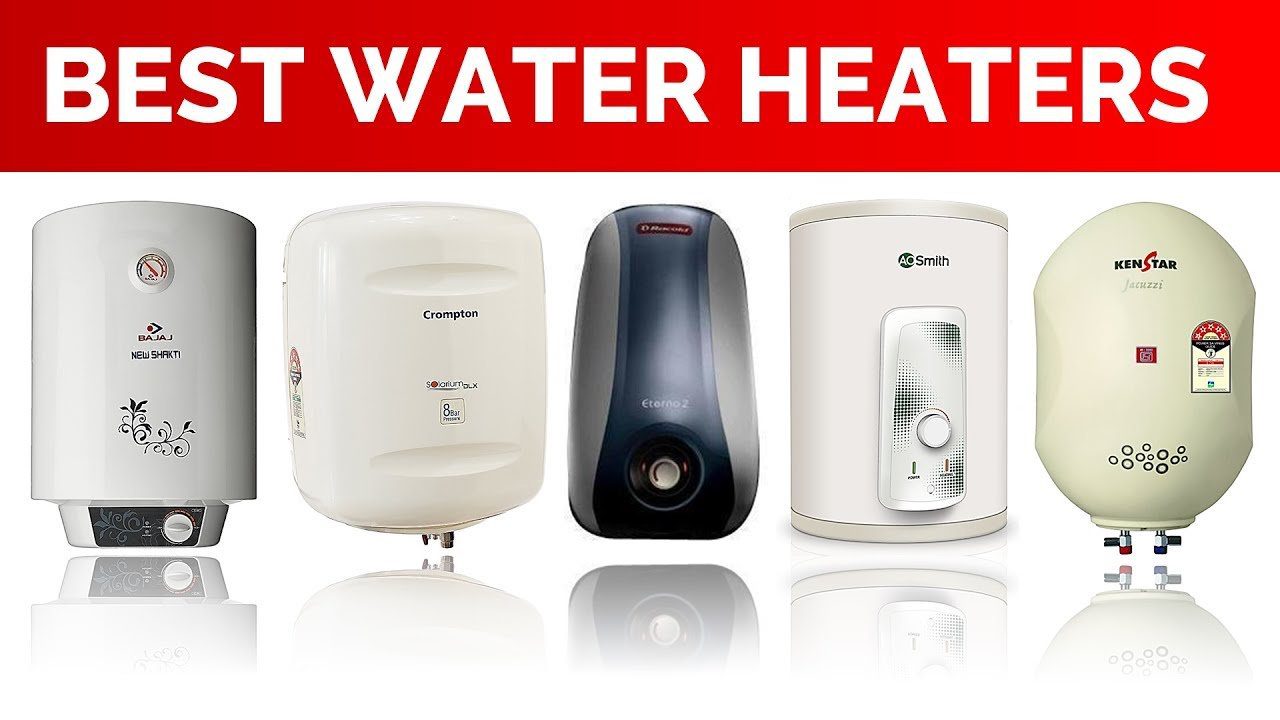
Did you know that switching from an electric geyser to a gas geyser in India can reduce your water heating costs by up to 70%? With rising electricity tariffs and increasing energy consciousness, Indian households are rapidly turning to gas-powered water heaters as their preferred choice for instant hot water.
Finding the perfect gas water heater can be overwhelming. With dozens of brands, varying capacities, and technical specifications to consider, many buyers end up confused or worse—making the wrong purchase that leads to regret and unnecessary expenses.
This comprehensive guide cuts through the noise. We’ve researched, tested, and compiled expert reviews of the top 10 best gas geysers available in India for 2026. Whether you need an instant water heater for your bathroom, kitchen, or entire home, you’ll discover exactly which model suits your needs, budget, and family size.
By the end of this article, you’ll understand how gas geysers work, what features matter most, and which product offers the best value for your money. Let’s dive in and find your ideal hot water solution.
What is a Gas Geyser? Understanding the Basics

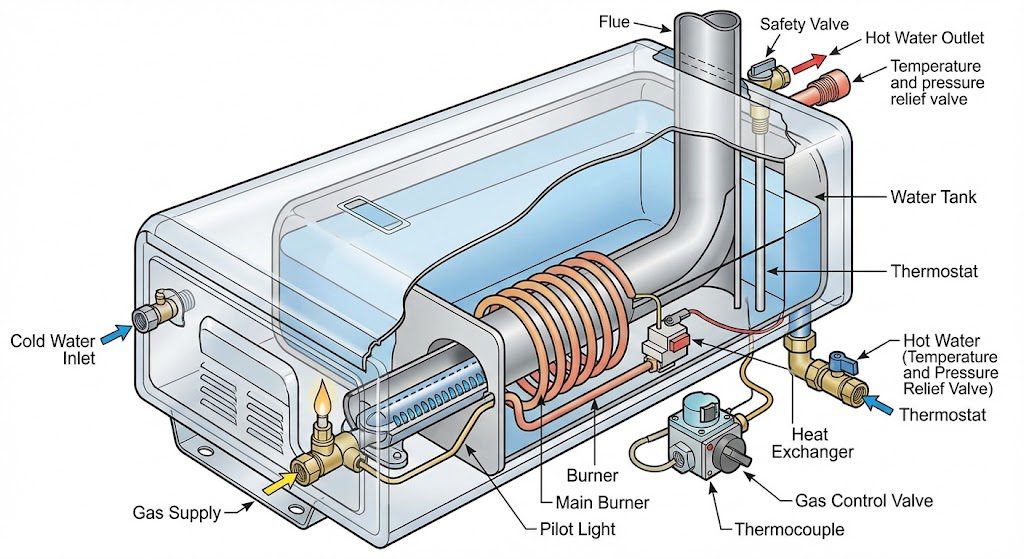
Definition: A gas geyser (also called a gas water heater or instant gas geyser) is a water heating appliance that uses LPG (Liquefied Petroleum Gas) or natural gas as fuel to heat water instantly on demand. Unlike storage water heaters, gas geysers heat water only when you need it, providing unlimited hot water without the wait time associated with electric geysers.
How Does a Gas Geyser Work?
Understanding the working mechanism of a gas water heater helps you appreciate its efficiency. When you turn on the hot water tap, cold water flows through the inlet pipe into the geyser. This water flow activates the gas valve and ignition system.
The gas burner ignites, creating a flame that heats the copper heat exchanger. As cold water passes through this coiled copper tube positioned above the flame, it absorbs heat rapidly. Within seconds, hot water exits through the outlet pipe and reaches your tap.
The entire process is instantaneous. There’s no storage tank, no waiting period, and no energy wasted on maintaining water temperature. The moment you close the tap, the gas supply automatically shuts off—making it remarkably energy-efficient.
Key Components of a Gas Geyser
- Gas Burner: The primary heating element that burns LPG or natural gas to produce heat
- Heat Exchanger: Copper coils that transfer heat from the flame to the water efficiently
- Ignition System: Can be battery-powered, hydro-powered, or manual pilot light
- Water Flow Sensor: Detects water flow to activate or deactivate the burner
- Temperature Control: Knob or digital display to adjust hot water temperature
- Safety Valve: Prevents accidents by cutting off gas supply in case of malfunction
Gas Geyser vs Electric Geyser: Which is Better for Indian Homes?
One of the most common questions Indian consumers ask is whether to choose a gas geyser or an electric geyser. Both have their merits, but understanding the differences helps you make an informed decision based on your specific circumstances.
| Feature | Gas Geyser | Electric Geyser |
| Operating Cost | Very Low (₹150-300/month) | High (₹500-1500/month) |
| Initial Cost | ₹4,000 – ₹15,000 | ₹3,000 – ₹25,000 |
| Heating Time | Instant (within seconds) | 15-30 minutes for storage type |
| Hot Water Supply | Unlimited continuous supply | Limited by tank capacity |
| Energy Efficiency | 85-95% efficient | 90-95% efficient |
| Installation | Requires ventilation | Easier, no ventilation needed |
| Maintenance | Annual servicing recommended | Minimal maintenance |
| Lifespan | 10-15 years | 8-12 years |
| Best For | High usage, large families | Low usage, apartments |
When to Choose a Gas Geyser
Gas geysers are ideal when you need instant hot water without waiting, have a large family with high hot water demand, want to significantly reduce electricity bills, have proper ventilation available, and live in areas with reliable LPG supply. The cost savings over time make gas geysers particularly attractive for budget-conscious Indian households.
When to Choose an Electric Geyser
Electric geysers work better for apartments with ventilation restrictions, areas with inconsistent gas supply, single-person households with low hot water needs, and situations where you prefer a simpler installation process. However, be prepared for higher monthly electricity costs and waiting time for hot water.
7 Key Benefits of Using a Gas Geyser in India
Understanding the advantages of gas water heaters helps justify the investment. Here are the top benefits that make gas geysers increasingly popular in Indian homes:
1. Significant Cost Savings
The most compelling advantage is the dramatic reduction in operating costs. LPG is substantially cheaper than electricity for water heating. A typical family of four can save ₹500-1000 monthly compared to using an electric storage geyser. Over the 10-15 year lifespan, this translates to savings of ₹60,000-180,000.
2. Instant Hot Water on Demand
No more waiting 20-30 minutes for water to heat up. Gas geysers provide hot water within seconds of turning on the tap. This is particularly valuable during busy morning routines when multiple family members need hot water consecutively.
3. Unlimited Hot Water Supply
Unlike storage geysers that run out of hot water after the tank empties, gas geysers provide continuous hot water as long as there’s gas and water supply. This makes them perfect for large families, guest houses, and homes with multiple bathrooms.
4. Energy Efficiency
Gas geysers only heat water when you need it. There’s no standby energy loss associated with keeping water hot in a tank. This on-demand heating system achieves 85-95% energy efficiency, making it an environmentally responsible choice.
5. Space-Saving Design
Most gas geysers are compact and wall-mounted, requiring minimal space. They’re significantly smaller than storage water heaters, making them ideal for Indian bathrooms and kitchens where space is often at a premium.
6. Works During Power Outages
Many gas geysers use battery-powered or hydro-powered ignition systems, meaning they work even during electricity blackouts. This is a significant advantage in areas with unreliable power supply—a common challenge across many Indian regions.
7. Longer Lifespan
With proper maintenance, quality gas geysers last 10-15 years—often outlasting their electric counterparts. The absence of a heating element that can corrode over time contributes to this extended durability.
Complete Gas Geyser Buying Guide: 12 Factors to Consider
[IMAGE: Infographic showing key factors to consider when buying a gas geyser | Alt text: Gas geyser buying guide infographic showing capacity safety features and price factors]Before purchasing a gas geyser in India, evaluate these critical factors to ensure you select the perfect model for your home:
1. Capacity and Flow Rate
Gas geyser capacity is measured in liters per minute (LPM). The flow rate determines how much hot water the geyser can deliver continuously. Here’s a general guideline:
- 5-6 LPM: Suitable for single bathroom, 1-2 person household, kitchen use
- 6-8 LPM: Ideal for small families (2-4 members), single bathroom with moderate use
- 8-10 LPM: Perfect for medium families (4-6 members), multiple bathrooms
- 10+ LPM: Recommended for large families, commercial use, multiple simultaneous users
2. Safety Features
Safety should be your top priority. Look for these essential safety mechanisms:
- Flame Failure Device (FFD): Automatically cuts gas supply if the flame extinguishes
- Oxygen Depletion Sensor (ODS): Shuts off the geyser if oxygen levels drop dangerously
- Anti-Dry Firing Protection: Prevents ignition without adequate water flow
- Over-Temperature Protection: Cuts off gas if water temperature exceeds safe limits
- ISI Certification: Ensures the product meets Bureau of Indian Standards safety requirements
3. Ignition Type
Gas geysers come with different ignition systems:
- Manual/Pilot Light: Oldest technology, requires manual lighting, least expensive
- Battery-Powered Electronic: Auto-ignites when water flows, batteries need periodic replacement
- Hydro-Generator: Uses water flow to generate ignition power, no batteries needed, most convenient
4. Heat Exchanger Material
The heat exchanger is crucial for efficiency and durability:
- Copper: Excellent heat transfer, corrosion-resistant, longer lifespan, premium option
- Aluminum: Good heat transfer, more affordable, shorter lifespan than copper
5. Gas Compatibility
Ensure the geyser is compatible with your gas supply:
- LPG (Liquefied Petroleum Gas): Most common in Indian households, uses standard cooking gas cylinders
- PNG (Piped Natural Gas): Available in select cities, requires PNG-compatible model
6. Water Pressure Requirements
Gas geysers require minimum water pressure to function properly. Standard models need 0.5-1 bar pressure. If your area has low water pressure, choose a low-pressure gas geyser designed to work with overhead tank systems. These models can operate with as little as 0.1 bar pressure.
7. Temperature Control
Look for models with adjustable temperature settings. Summer and winter modes allow you to optimize gas consumption based on seasonal requirements. Some premium models offer digital temperature displays and precise control.
8. Brand Reputation and After-Sales Service
Choose established brands with good service networks in India. Brands like Racold, Bajaj, Havells, Crompton, and V-Guard have extensive service centers across the country. Good after-sales support ensures easy availability of spare parts and professional servicing.
9. Warranty Period
Most quality gas geysers offer 2-5 year warranties. Some brands provide extended warranties on specific components like the heat exchanger. Always verify warranty terms and what’s covered before purchase.
10. Installation Requirements
Gas geysers require proper ventilation. Ensure your bathroom has adequate airflow or a dedicated exhaust system. The installation location should allow easy access to the gas supply line and proper flue pipe routing for exhaust gases.
11. Energy Efficiency Rating
While gas geysers don’t have BEE star ratings like electric appliances, look for models with high thermal efficiency (85%+). Features like modulating burners and electronic ignition contribute to better fuel efficiency.
12. Price vs Value
Gas geyser prices in India range from ₹4,000 to ₹15,000+. Don’t just look at the sticker price—consider long-term value including operating costs, durability, warranty, and service support. A slightly expensive model with better build quality often provides superior value over its lifetime.
Top 10 Best Gas Geyser in India 2025: Detailed Reviews
After extensive research and analysis, here are the top 10 best gas geysers available in India. Each product has been evaluated for performance, safety, value, and customer feedback.
1. Racold Gas Geyser LPG – Best Overall Choice
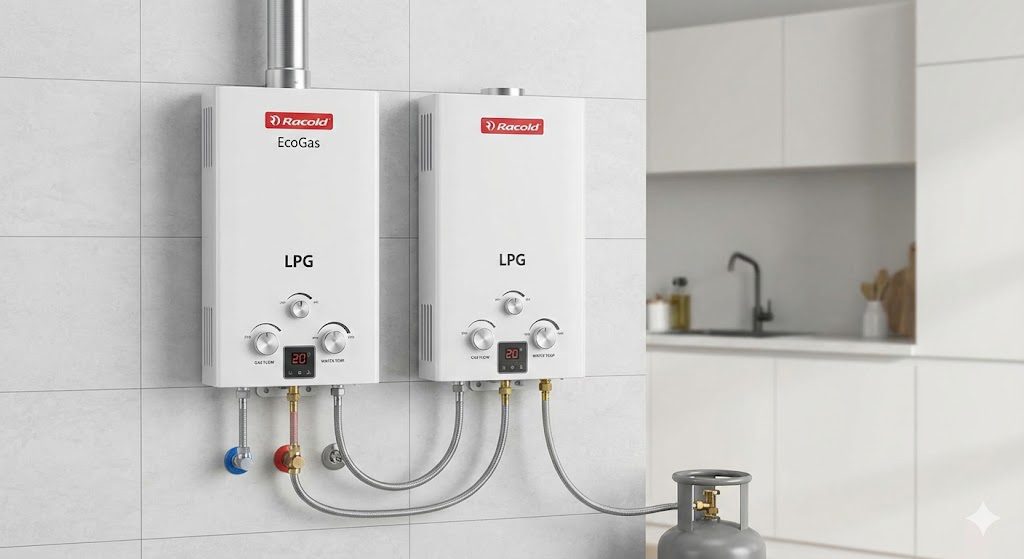
Racold, backed by the Ariston Group’s global expertise, delivers exceptional quality with this LPG gas geyser. Known for innovation and reliability, this model combines Italian engineering with Indian market understanding.
Key Specifications:
- Capacity: 6 LPM flow rate
- Heat Exchanger: Premium copper for superior heat transfer
- Ignition: Battery-powered electronic ignition
- Safety: Flame failure device, anti-dry firing, ISI certified
- Warranty: 2 years comprehensive
- Price Range: ₹7,500 – ₹9,000
Pros: Excellent build quality, reliable performance, strong service network, suitable for standard water pressure, compact design fits most bathrooms.
Cons: Slightly higher price than budget alternatives, may need pressure booster in low-pressure areas.
Best For: Quality-conscious buyers seeking reliable, long-term performance from a trusted brand.
2. Bajaj Majesty Duetto Gas Water Heater – Best Value
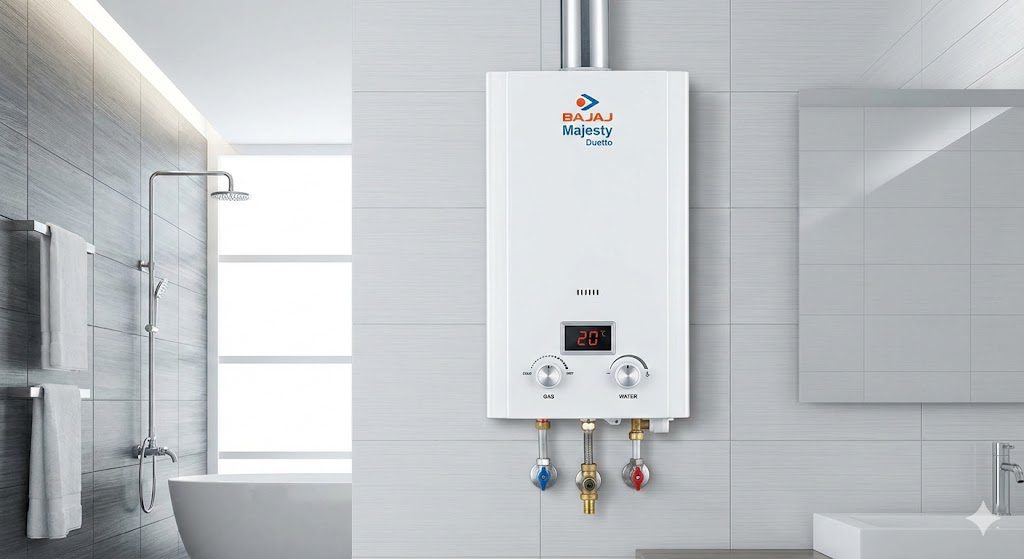
Bajaj’s trusted reputation in Indian appliances extends to their gas geyser range. The Majesty Duetto offers an excellent balance of features and affordability, making it a popular choice among value-seeking consumers.
Key Specifications:
- Capacity: 6 LPM continuous flow
- Heat Exchanger: Copper heat exchanger
- Ignition: Battery-operated electronic
- Safety: Multi-layered safety with FFD and ODS
- Warranty: 2 years on product
- Price Range: ₹5,500 – ₹7,000
Pros: Excellent price-to-performance ratio, wide service network across India, trusted brand, summer/winter mode for gas saving, durable construction.
Cons: Basic temperature control, batteries need regular replacement.
Best For: Budget-conscious buyers who want reliable performance from a well-known brand without premium pricing.
3. Havells Adonia Gas Geyser – Premium Features
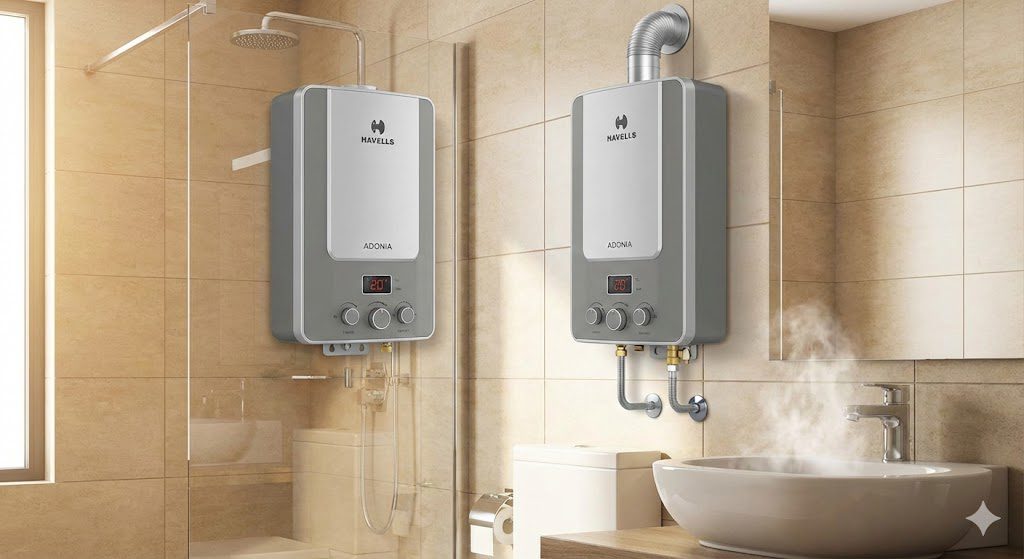
Havells brings premium features to their gas geyser lineup with the Adonia series. Known for quality electrical products, Havells applies the same standards to their gas water heaters, resulting in a feature-rich appliance.
Key Specifications:
- Capacity: 6 LPM instant heating
- Heat Exchanger: High-grade copper coil
- Ignition: Auto-ignition electronic system
- Special Features: LED display, temperature adjustment
- Safety: 5-level safety protection system
- Warranty: 2 years comprehensive
- Price Range: ₹8,000 – ₹10,500
Pros: Modern aesthetics with LED display, precise temperature control, multiple safety layers, excellent brand reputation, premium build quality.
Cons: Higher price point, may be overkill for basic requirements.
Best For: Buyers who want premium features, modern design, and are willing to pay extra for enhanced functionality.
4. Crompton Solarium Qube Gas Water Heater – Compact Design
Crompton’s Solarium Qube stands out with its compact, space-saving design perfect for modern Indian bathrooms. Despite its smaller footprint, it delivers impressive performance.
Key Specifications:
- Capacity: 6 LPM output
- Heat Exchanger: Copper with thermal efficiency
- Ignition: Battery-powered instant ignition
- Design: Ultra-compact for space-constrained installations
- Safety: ISI marked with multiple safety features
- Warranty: 2 years manufacturer warranty
- Price Range: ₹5,800 – ₹7,500
Pros: Extremely compact, ideal for small bathrooms, good performance, trusted Crompton quality, reasonable pricing.
Cons: May not suit high-demand households, basic feature set.
Best For: Small bathrooms, studio apartments, or as a secondary geyser for kitchen use.
5. V-Guard Safeflo Plus Gas Geyser – Safety Champion
V-Guard, renowned for voltage stabilizers and safety equipment, brings their safety expertise to the Safeflo Plus gas geyser. This model prioritizes safety without compromising on performance.
Key Specifications:
- Capacity: 6 LPM flow rate
- Heat Exchanger: Premium copper for longevity
- Ignition: Electronic auto-ignition
- Safety: 6-layer safety mechanism including FFD, ODS, anti-freeze
- Warranty: 2 years on product
- Price Range: ₹6,500 – ₹8,500
Pros: Industry-leading safety features, reliable V-Guard quality, good service network in South India, durable construction, ISI certified.
Cons: Service network stronger in southern states, mid-range pricing.
Best For: Safety-conscious consumers, families with children or elderly members, areas with fluctuating gas pressure.
6. Morphy Richards Lavo Gas Water Heater – Stylish Design
Morphy Richards brings British design sensibility to the Indian gas geyser market with the Lavo series. This model combines aesthetic appeal with functional excellence.
Key Specifications:
- Capacity: 6 LPM instant heating
- Heat Exchanger: Copper heat exchanger
- Ignition: Battery-operated with LED indicator
- Design: Contemporary European styling
- Safety: Multi-safety protection system
- Warranty: 2 years warranty
- Price Range: ₹6,000 – ₹8,000
Pros: Attractive modern design, good build quality, LED indicator for operation status, reliable performance, decent warranty.
Cons: Limited service centers compared to Indian brands, premium design comes at slightly higher cost.
Best For: Homeowners who prioritize aesthetics alongside functionality, modern bathroom interiors.
7. Prestige Instant Gas Water Heater – Kitchen Specialist
TTK Prestige, famous for kitchen appliances, extends their expertise to gas water heaters. Their instant gas geyser is particularly well-suited for kitchen applications.
Key Specifications:
- Capacity: 6 LPM continuous flow
- Heat Exchanger: Copper for efficient heating
- Ignition: Auto-ignition technology
- Special: Compact size ideal for kitchen installation
- Safety: Standard safety features with ISI mark
- Warranty: 2 years
- Price Range: ₹5,500 – ₹7,000
Pros: Excellent for kitchen use, trusted Prestige brand, compact dimensions, easy integration with kitchen design, good after-sales service.
Cons: Better suited for kitchen than bathroom, basic feature set.
Best For: Kitchen hot water needs, smaller households, supplementary water heating.
8. AO Smith HSE-SAS Gas Water Heater – High Capacity
AO Smith, a global leader in water heating technology, offers premium gas geysers for demanding applications. Their HSE-SAS model caters to larger families and higher hot water requirements.
Key Specifications:
- Capacity: 8 LPM high-output flow
- Heat Exchanger: Premium grade copper
- Ignition: Advanced electronic ignition
- Special: Suitable for multiple outlets, high-demand situations
- Safety: Advanced safety protocols
- Warranty: 2 years comprehensive
- Price Range: ₹10,000 – ₹14,000
Pros: High capacity for large families, premium American brand quality, excellent durability, suitable for multiple bathrooms, professional-grade performance.
Cons: Higher price point, may be oversized for smaller households.
Best For: Large families (5+ members), homes with multiple bathrooms, bungalows, and villas requiring simultaneous hot water usage.
9. Orient Electric Vento Gas Geyser – Budget Friendly
Orient Electric offers an affordable entry into gas water heating with the Vento series. This budget-friendly option doesn’t compromise on essential features.
Key Specifications:
- Capacity: 6 LPM standard flow
- Heat Exchanger: Aluminum/copper options available
- Ignition: Battery-powered electronic
- Price Positioning: Most affordable in category
- Safety: Basic safety features, ISI certified
- Warranty: 2 years
- Price Range: ₹4,000 – ₹5,500
Pros: Most affordable option, good for entry-level buyers, covers essential features, decent Orient service network, value for money.
Cons: Basic feature set, aluminum heat exchanger in lower variants, may not last as long as premium models.
Best For: Budget-conscious buyers, rental properties, secondary installation, first-time gas geyser users.
10. Kenstar Aquafresh Gas Water Heater – Reliable Performance
Kenstar completes our top 10 list with the Aquafresh series. Known for dependable home appliances, Kenstar delivers consistent performance at a reasonable price.
Key Specifications:
- Capacity: 6 LPM flow rate
- Heat Exchanger: Copper coil construction
- Ignition: Electronic auto-ignition
- Features: Summer/winter mode, adjustable temperature
- Safety: Standard safety mechanisms
- Warranty: 2 years on product
- Price Range: ₹5,000 – ₹6,500
Pros: Balanced price-performance, summer/winter modes for efficiency, copper heat exchanger, established brand presence.
Cons: Service network varies by region, mid-tier positioning.
Best For: Middle-income households seeking reliable performance without premium pricing, average family requirements.
Quick Comparison: Top 10 Gas Geysers in India
Use this comparison table to quickly evaluate all 10 products:
| Brand/Model | Capacity | Price (₹) | Best Feature | Ideal For |
| Racold LPG | 6 LPM | 7,500-9,000 | Overall Quality | Quality seekers |
| Bajaj Majesty Duetto | 6 LPM | 5,500-7,000 | Best Value | Budget buyers |
| Havells Adonia | 6 LPM | 8,000-10,500 | LED Display | Premium buyers |
| Crompton Solarium | 6 LPM | 5,800-7,500 | Compact Size | Small bathrooms |
| V-Guard Safeflo Plus | 6 LPM | 6,500-8,500 | 6-Layer Safety | Safety-focused |
| Morphy Richards Lavo | 6 LPM | 6,000-8,000 | Stylish Design | Modern homes |
| Prestige Instant | 6 LPM | 5,500-7,000 | Kitchen Use | Kitchen focus |
| AO Smith HSE-SAS | 8 LPM | 10,000-14,000 | High Capacity | Large families |
| Orient Electric Vento | 6 LPM | 4,000-5,500 | Lowest Price | Entry-level |
| Kenstar Aquafresh | 6 LPM | 5,000-6,500 | Reliable | Average families |
Gas Geyser Installation Guide: Step-by-Step Process
Important: Gas geyser installation should only be performed by qualified professionals. Improper installation can lead to gas leaks, carbon monoxide poisoning, or fire hazards. Always hire certified technicians.
Pre-Installation Requirements
- Ventilation Assessment: Ensure the installation location has proper air circulation. A window, exhaust fan, or dedicated ventilation duct is essential.
- Gas Supply Availability: Confirm LPG cylinder access or PNG pipeline connection nearby.
- Water Pressure Check: Verify minimum water pressure meets geyser requirements (typically 0.5-1 bar).
- Wall Strength: The mounting wall must be strong enough to support the geyser weight (typically 8-12 kg).
- Clearance Space: Maintain recommended clearances from ceiling, walls, and combustible materials.
Installation Steps (Professional Use Only)
- Mount the Bracket: Secure the wall-mounting bracket at the appropriate height using appropriate anchors.
- Connect Water Lines: Attach cold water inlet and hot water outlet pipes using proper fittings.
- Install Gas Connection: Connect the gas supply line with approved fittings and check for leaks using soap solution.
- Set Up Exhaust Flue: Install the exhaust pipe directing combustion gases outside.
- Insert Batteries: For battery-operated ignition, install fresh batteries.
- Test Operation: Turn on water and gas supply, verify ignition, and check for proper heating.
- Safety Verification: Conduct leak tests on all gas connections and ensure safety devices function correctly.
Gas Geyser Maintenance: Tips for Long-Lasting Performance
Regular maintenance extends the life of your gas geyser and ensures safe, efficient operation. Here’s a comprehensive maintenance schedule:
Weekly Maintenance
- Check for any unusual smells near the geyser
- Verify that the flame burns blue (yellow flame indicates issues)
- Ensure proper ventilation is not blocked
Monthly Maintenance
- Clean the exterior with a damp cloth
- Check gas connections for any signs of wear
- Test safety features (flame failure device)
- Replace batteries if ignition becomes weak (for battery models)
Annual Professional Servicing
- Complete inspection by authorized service technician
- Cleaning of burner and heat exchanger
- Gas pressure calibration
- Safety valve testing
- Replacement of worn parts
Essential Safety Guidelines for Gas Geyser Users
Safety is paramount when using gas appliances. Follow these guidelines to protect your family:
Critical Safety Rules
- Never Block Ventilation: Adequate airflow prevents carbon monoxide buildup. Never seal the bathroom completely during use.
- Install Carbon Monoxide Detector: Place a CO detector near the geyser for early warning of dangerous gas levels.
- Turn Off When Not in Use: Close the gas valve when leaving home for extended periods.
- Regular Leak Checks: Use soap solution on connections periodically to check for gas leaks (bubbles indicate leakage).
- Keep Flammables Away: Maintain distance between the geyser and combustible materials like towels, curtains, or cleaning agents.
- Know Emergency Procedures: In case of gas smell, immediately turn off the gas supply, open windows, evacuate, and call for professional help.
- Children Safety: Keep children away from the geyser and educate them about gas appliance safety.
Common Gas Geyser Problems and Solutions
Here are solutions to common issues you might encounter:
Problem: Geyser Won’t Ignite
Possible Causes: Dead batteries, insufficient water pressure, gas supply issue, dirty ignition electrodes.
Solutions: Replace batteries, check water valve is fully open, verify gas cylinder is not empty, call technician for electrode cleaning.
Problem: Water Not Hot Enough
Possible Causes: High water flow rate, temperature set too low, scale buildup in heat exchanger.
Solutions: Reduce water flow, increase temperature setting, schedule professional descaling service.
Problem: Yellow or Orange Flame
Possible Causes: Incomplete combustion, dirty burner, insufficient air supply.
Solutions: Improve ventilation immediately, stop using the geyser, call a professional for burner cleaning and adjustment.
Problem: Water Leaking from Geyser
Possible Causes: Loose connections, damaged seals, cracked heat exchanger.
Solutions: Tighten fittings, replace seals, or contact service center for heat exchanger inspection.
Our Top Recommendations by Category
Based on our comprehensive analysis, here are our top picks for different user needs:
- Best Overall: Racold Gas Geyser LPG – Excellent balance of quality, features, and reliability
- Best Value for Money: Bajaj Majesty Duetto – Maximum features at an affordable price
- Best Premium Option: Havells Adonia – LED display, precise controls, and top-tier build quality
- Best for Safety: V-Guard Safeflo Plus – 6-layer safety mechanism for peace of mind
- Best for Large Families: AO Smith HSE-SAS – 8 LPM capacity for high-demand households
- Best Budget Pick: Orient Electric Vento – Affordable entry into gas water heating
- Best for Small Spaces: Crompton Solarium Qube – Ultra-compact design for space-constrained bathrooms
Conclusion: Making the Right Choice
Investing in the right gas geyser in India can transform your daily routine while significantly reducing water heating costs. As we’ve explored in this comprehensive guide, the key is matching your specific requirements with the right product features.
Key Takeaways:
- Gas geysers offer substantial cost savings (up to 70%) compared to electric water heaters
- Safety features like FFD and ODS are non-negotiable – always choose ISI-certified products
- Capacity (LPM) should match your family size and usage patterns
- Copper heat exchangers offer superior durability and efficiency
- Regular maintenance and proper ventilation are essential for safe, long-lasting operation
Whether you prioritize budget, features, safety, or capacity, there’s a perfect gas geyser waiting for you among our top 10 recommendations. Make your purchase from authorized dealers to ensure warranty validity and access to genuine after-sales support.
Ready to experience the benefits of instant hot water? Share this guide with friends and family who might be considering a gas geyser. Have questions or experiences to share? Drop a comment below—we’d love to hear from you!
Frequently Asked Questions (FAQs)
How much gas does a gas geyser consume per month?
A typical household using a gas geyser for 30-45 minutes daily consumes approximately 2-3 kg of LPG per month. This translates to roughly ₹150-300 monthly cost, which is significantly lower than the ₹500-1500 electricity cost for an equivalent electric geyser. Actual consumption varies based on usage patterns, water temperature requirements, and geyser efficiency. Using summer mode during warmer months can reduce gas consumption by 20-30%.
Can I use a gas geyser with low water pressure from an overhead tank?
Yes, you can use a gas geyser with overhead tank water supply, but you need to select a low-pressure compatible model. Standard gas geysers require minimum 0.5-1 bar water pressure, while low-pressure models can operate with as little as 0.1 bar. Look for models specifically marketed as “low-pressure” or “works with overhead tank.” Alternatively, you can install a pressure booster pump to increase water pressure to meet standard geyser requirements.
Is it safe to use a gas geyser in an enclosed bathroom?
Gas geysers should never be used in completely enclosed bathrooms without proper ventilation. Combustion requires oxygen and produces exhaust gases including carbon monoxide. At minimum, your bathroom should have a window, ventilator, or exhaust fan that operates during and after geyser use. Modern gas geysers include Oxygen Depletion Sensors (ODS) that automatically shut off the appliance if oxygen levels drop dangerously, but this safety feature shouldn’t replace proper ventilation.
How long does a gas geyser typically last?
A quality gas geyser with proper maintenance lasts 10-15 years, often outlasting electric geysers. Longevity depends on several factors: build quality, heat exchanger material (copper lasts longer than aluminum), water quality in your area, regularity of maintenance, and usage intensity. Annual professional servicing, timely replacement of worn parts, and avoiding hard water damage through water softeners can maximize your geyser’s lifespan.
What’s the difference between LPG and PNG gas geysers?
LPG (Liquefied Petroleum Gas) geysers use bottled gas cylinders and are available throughout India. PNG (Piped Natural Gas) geysers connect to city gas pipelines, available in select cities like Mumbai, Delhi, Pune, and Ahmedabad. The main differences are: LPG geysers require cylinder refills while PNG offers continuous supply; PNG operating costs are slightly lower; and you cannot interchange them—each requires a specifically calibrated model. Before purchasing, confirm which gas type is available in your area.
Can I install a gas geyser myself to save installation costs?
No, self-installation of gas geysers is strongly discouraged and potentially dangerous. Gas appliance installation requires technical expertise to ensure proper gas connections, leak-free fittings, correct ventilation setup, and safety device calibration. Improper installation can lead to gas leaks, carbon monoxide poisoning, fire hazards, or inefficient operation. Most brands offer free or subsidized professional installation. Warranty coverage typically requires installation by authorized personnel. Always hire certified technicians for safe, compliant installation.